




Facial cleansing brush have become essential tools for many skincare enthusiasts. They cleanse pores more deeply than manual cleansing, removing makeup residue and exfoliating dead skin cells. However, a common question among skincare lovers is: Is daily use safe? The answer isn’t a simple yes or no, it entirely depends on your skin type, the design of facial brush for cleansing, and how you use it.
For some skin types, daily use of a facial cleansing brush can yield significant results. However, for certain skin types, it may potentially cause redness, dryness, or breakouts. This article will clarify whether daily use of a facial cleansing device is suitable for different skin types, share how to choose a best facial cleansing brush tailored to your skin type, and answer frequently asked questions. After reading this article, you will master the safe and effective way to use a facial cleansing brush and cultivate radiant, healthy skin.

Most facial cleansing brush, including popular sonic facial cleansing brush, gently rub the skin’s surface with rotating or oscillating bristles. This mechanical action removes dirt and oil from pores, resulting in a more thorough cleanse than hand cleansing.
However, this friction is a double-edged sword. While it effectively removes impurities, overuse can damage the skin’s protective barrier. Once the barrier is damaged, the skin becomes dry, sensitive, and even prone to inflammation. The key to safe use is matching the intensity and frequency of the cleansing device to the skin’s natural tolerance.
Oily skin produces excess sebum, easily clogging pores and leading to blackheads and acne. Thanks to a thicker skin barrier and greater tolerance, oily skin can typically benefit from daily use of a facial cleansing brush when used correctly and appropriately.
Daily use can control oil production by removing surface oil and exfoliate, leaving skin clean and matte.
Best used: Choose a soft-bristled facial cleansing brush or a medium-hardness silicone facial cleansing brush; use a low to medium speed to avoid excessive friction and skin damage; gently glide in circular motions, avoiding pressing; focus on cleansing the T-zone; follow up with an oil-free, refreshing moisturizer to maintain the skin barrier.
Combination skin is characterized by an oily T-zone (forehead, nose, chin) and dry or normal cheeks, requiring a zonal balancing skincare approach. A facial cleansing brush can be used daily on the T-zone, but caution should be exercised when using it on the dry cheeks.
Correct practice: Use a facial brush for cleansing daily on the T-zone and 2-3 times a week on the cheeks; choose an ultra-soft bristle or silicone facial cleansing brush, as these silicone brushes are often rated as the best facial cleansing brush for combination skin due to their gentle and adjustable properties; do not leave the brush on the same area for more than 5 seconds; moisturize in different areas, using a refreshing type on the T-zone and a moisturizing type on the cheeks.
Dry skin has a thin and fragile skin barrier and low sebum production. Daily use of a facial cleansing brush can strip away essential oils, exacerbating dryness, flaking, and tightness. Dry skin should only use the brush 2-3 times per week.
Operation: Choose an ultra-soft bristle facial cleansing brush or one specifically designed for sensitive skin; prioritize oscillating models, as they are gentler than rotary models; wash your face with lukewarm water; limit each use to 30-45 seconds; after cleansing, gently pat dry, do not rub, and immediately apply a moisturizing cream or facial oil to replenish lost lipids.
Sensitive skin is easily irritated by friction, and daily use of facial cleansing brushes almost always causes redness, itching, or inflammation. It is recommended to use a facial cleansing brush only 1-2 times per week, and some people with severe sensitivity may even need to discontinue use completely.
Safe Use: Choose a silicone facial cleansing device, as its rounded contacts are the top choice among many gentle facial cleansing brush for sensitive skin reviews tested; use the lowest speed setting, and each session should not exceed 30 seconds; if you have used an exfoliating product that day, avoid using the facial cleansing brush to prevent excessive damage to the skin barrier; if the facial cleansing brush continues to cause discomfort, you can switch to using a soft face towel to cleanse your face manually.
Care for acne-prone skin requires extra caution: While facial cleansing brushes can unclog pores, improper use can irritate inflamed pimples or spread bacteria. Daily use of facial cleansing brushes is not recommended during active acne breakouts.
Key precautions: Use 2-3 times per week; avoid inflamed areas, only for non-inflamed clogged pores such as blackheads and closed comedones; choose a silicone facial cleansing brush; clean the brush with soap and water after each use, and replace the brush head every 3-4 months; if you have a serious skin condition or acne, please consult a dermatologist before use.

Regularly clean the device: Clean the facial cleansing brush thoroughly after each use; perform a deep cleanse weekly with warm water and mild soap or a facial cleansing brush cleaner. Replace the nylon brush head every 3-4 months; a silicone facial cleansing brush can last 6-12 months with proper care.
Control usage time: Do not exceed 60 seconds per cleanse. Excessive time will not improve cleansing effectiveness and may increase the risk of irritation.
Avoid the eye area: The skin around the eyes is extremely thin; use your fingers to gently cleanse instead.
Pay attention to skin feedback: If redness, dryness, tightness, or increased acne occurs, reduce the frequency of use or discontinue use.
Use a gentle cleanser: Use a non-foaming, pH-balanced cleanser. Using foaming cleansers in conjunction with mechanical exfoliation can easily lead to dry skin.
A facial cleansing brush is a highly effective skincare tool, but its effectiveness depends on whether it suits your skin type. Only oily skin is suitable for daily use; combination, dry, sensitive, and acne-prone skin should reduce usage frequency to 1-3 times per week.
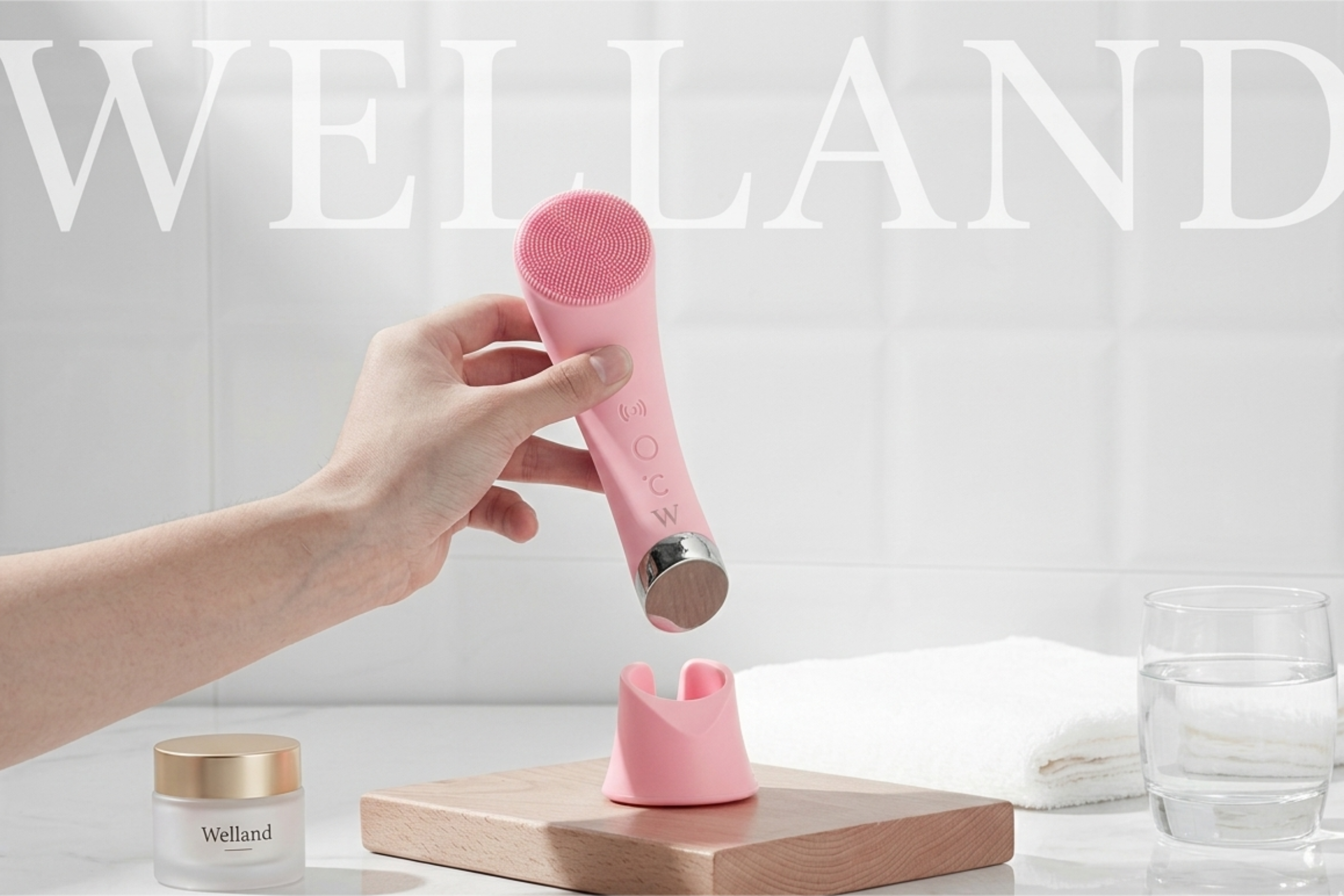
Choosing a best facial cleansing brush, such asWELLAND Facial Cleansing Brush, suitable for your skin type (e.g., silicone facial cleansing brush for sensitive or acne-prone skin, sonic facial cleansing brush for dry skin) can further enhance safety and effectiveness.
Using a facial cleansing brush cleanses and exfoliates without damaging the skin’s protective barrier. If unsure, prioritize reducing usage frequency: healthy skin is about balance, not frequent deep cleansing. By following the skin type guidelines and general safety rules in this article, you can safely enjoy the benefits of a facial cleansing device and maintain healthy, radiant skin.
Q1: Can people with rosacea use facial cleansing brushes?
A1: These patients need to be extremely cautious when using facial cleansing brushes, or should avoid using them. Rosacea-prone skin is highly sensitive to friction from devices, and any mechanical exfoliation from a cleansing brush can trigger an flare-up. Always consult a dermatologist before use. Some people can use gentle cleansing brushes for sensitive skin, using them at the lowest speed 1-2 times per week, but most people are better off not using them.
A2: If your skin remains red, dry, flaky, tight, stings when applying skincare products, or you experience increased breakouts after using a facial cleansing device, halve the frequency of use or stop using it for 1-2 weeks to allow your skin barrier to repair itself.
A3: It depends on your skin type. Silicone brushes are softer, more hygienic, and less prone to bacterial growth, making them more suitable for sensitive or dry skin. Nylon bristles are more effective at exfoliating and are suitable for oily skin, but you should choose a soft-bristled version. Both can be effective when used properly. The key to a good facial cleansing brush is adapting it to your skin’s tolerance.
A4: It can assist with cleansing. However, you should first use cleansing oil or water to dissolve the waterproof makeup before using the brush. Directly using a cleansing brush to remove waterproof makeup requires more pressure, which can easily irritate the skin. It’s worth noting that silicone cleansing brushes are more suitable for this auxiliary purpose than bristle brushes.
A5: Nylon brush head: Replace every 3-4 months. Silicone facial cleansing brush head: Replace every 6-12 months. If discoloration or unusual odor occurs, replace it immediately; this is crucial for maintaining the safety of a high-quality facial cleansing device.
 EN
EN  RU
RU  PT
PT  FR
FR  ES
ES  KO
KO  JA
JA  DE
DE  ZH
ZH