



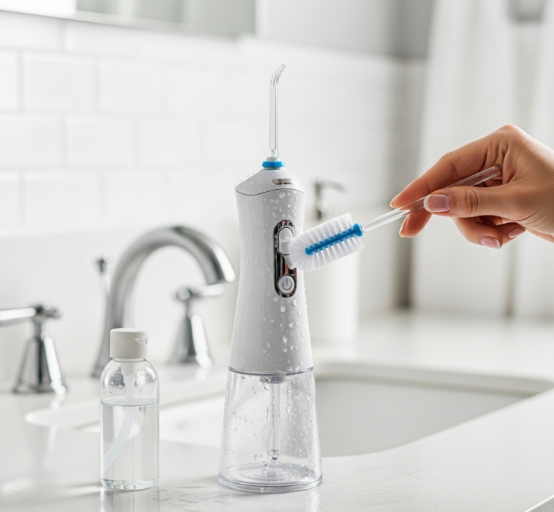
Water flossers are a powerful tool for maintaining oral health, but like any water-contact device, they require proper care to remain hygienic and effective. If not cleaned regularly, mineral deposits, mold, and bacteria can proliferate, reducing their performance and even impacting your dental health. In this guide, WELLAND water flosser experts share step-by-step instructions for cleaning water flossers, including cordless, rechargeable, and premium models, to keep your device fresh and your smile radiant.

Even if you use water daily, the moist environment inside a water flosser can promote bacterial growth. Regular cleaning can help:
1. Extend the service life of equipment
2. Maintain water pressure and water quality.
3. Prevent odors and unpleasant smells
4. Maintain oral hygiene
If you’re wondering how often to clean your water flosser, a general rule is to do a light cleaning once a week and a deep cleaning once a month.

1. Mild dishwashing liquid
2. White vinegar or hydrogen peroxide
3. Soft cleaning brush or toothbrush
4. Clean microfiber towel
5. Warm water

If you have a rechargeable or cordless water flosser, turn it off and remove any removable parts, such as the tank and tip.
Tips are where most bacteria congregate.
1. Remove the tip from the handle.
2. Soak it in a mixture of 2 parts warm water and 1 part white vinegar for 5-7 minutes.
3. Rinse under running water and let it air dry.
If you are learning how to clean the tip of a cordless water flosser, follow the same steps – just make sure the tip is completely dry before reconnecting.
Mineral buildup inside pipes can restrict water flow.
1. Pour the vinegar solution (ratio 1:2) into the water tank.
2. Run the dental flosser for 30 seconds to allow the solution to flow through the tube.
3. Empty the water tank, refill it with clean water, and then run the flushing process again.
Deep cleaning:
1. Remove the water tank and wash it with mild detergent.
2. Wipe the inside of the equipment with a damp cloth.
3. For stubborn stains, pour a vinegar solution into the machine twice.
Wireless models, such as the WELLAND water flosser, while convenient to carry, are more prone to moisture buildup inside the charging port. Please be sure to:
1. Keep the charging base dry.
2. After cleaning, please store upright.

1. Replace the pen nib every 3–6 months for optimal performance.
2. Use distilled water in hard water areas to prevent scaling.
3. Do not immerse the main unit in water.
4. For WELLAND premium water flosser models, please refer to the manual for information on the built-in cleaning functions.

Keeping your water flosser clean is not only about hygiene, but also crucial for ensuring stable water pressure and extending the life of your device. For best results, please follow these cleaning steps:
After each use : Empty the water tank, wipe off the water, and store the equipment upright.
Weekly : Rinse the pipette tip, reservoir, and tubing with warm water or mild soap to prevent bacterial buildup.
Monthly : Use a solution of white vinegar and water for deep cleaning to remove mineral deposits and stubborn residues.
If you use a cordless or rechargeable water flosser daily, you may need to perform deep cleaning more frequently, especially in areas with hard water. Consistent maintenance will ensure your WELLAND water flosser remains as fresh and powerful as when you first purchased it.
Learning how to clean a water flosser is the simplest way to maintain safe, effective, and pleasant oral hygiene. Whether you own a cordless, rechargeable, or premium water flosser, regular cleaning prevents bacterial growth, maintains a strong water flow, and extends the life of your device. WELLAND water flossers are even easier to maintain—our design features a removable tank, durable materials, and user-friendly components, making cleaning quicker and easier. Give your smile the care it deserves. Explore the WELLAND water flosser range today for a cleaner, healthier mouth every time you use it.
 EN
EN  RU
RU  PT
PT  FR
FR  ES
ES  KO
KO  JA
JA  DE
DE  ZH
ZH