



In the modern fitness and wellness field, recovery is no longer an optional step, but a crucial part of many training programs. Whether you’re a fitness enthusiast, a professional athlete, or an office worker looking to relieve muscle stiffness from prolonged sitting, you’ve likely encountered two powerful tools for relaxing your myofascia: foam rollers and massage guns.
Which one is better for muscle relaxation? This is a question many people wonder about. In fact, both tools can relieve muscle tension, promote blood circulation, and accelerate recovery, but they work in very different ways. One relies on strong mechanical force and body weight, while the other utilizes high-frequency impact technology.
In this article, we will analyze these two tools in depth. After reading this article, you will clearly know which tool is more suitable to add to your equipment collection.

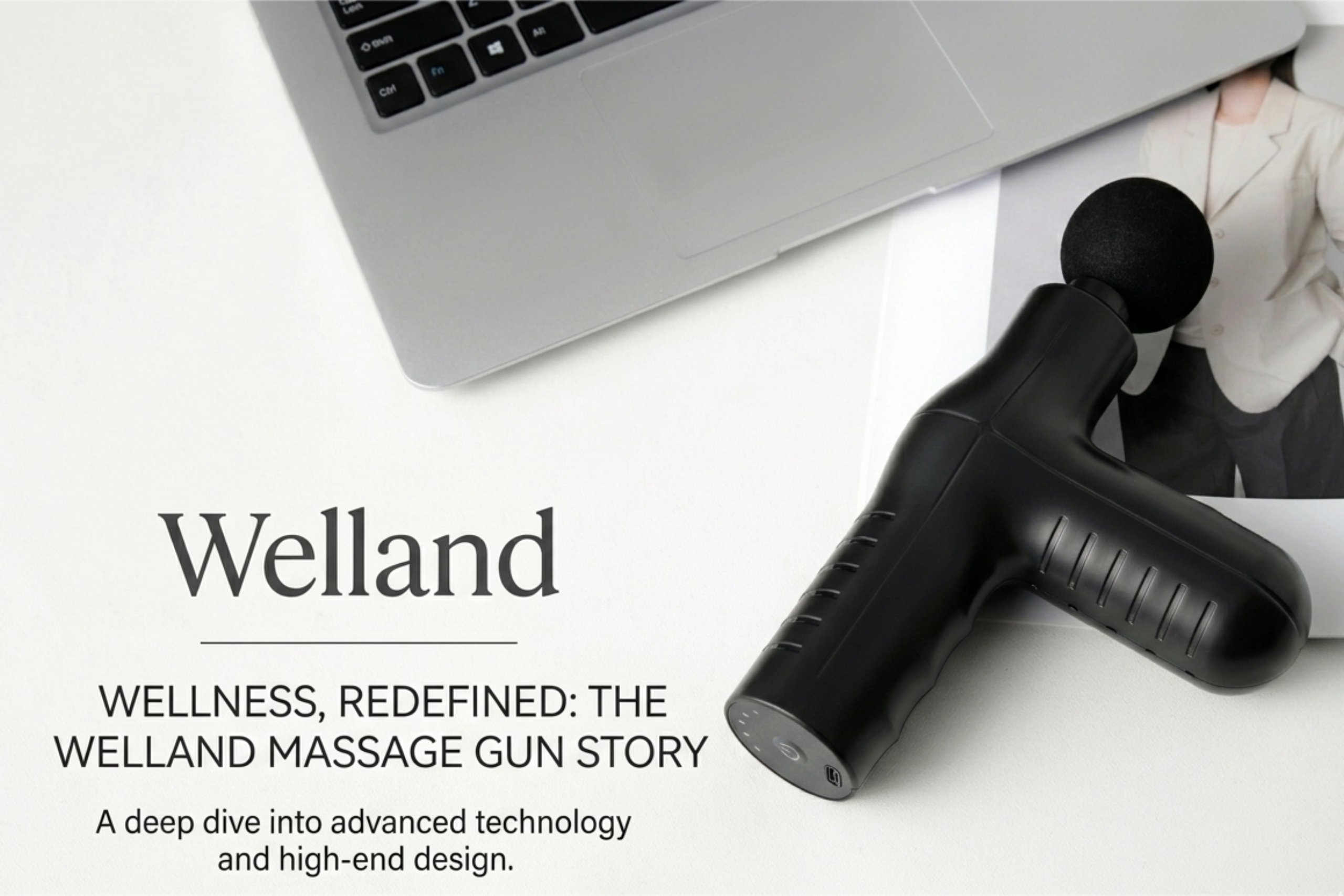
A massage gun is a handheld, rechargeable massage tool that uses high-frequency, concentrated vibrations to penetrate deep into muscle tissue. Unlike manual stretching or rolling, a massage gun relies on stable impact force to reach deep muscle fibers and fascia.
A high-quality muscle massage gun typically features multiple speed settings, replaceable massage heads, and an ergonomic design. One of the most well-known massage gun benefits is its ability to quickly relieve muscle tension with minimal effort.
Whether you need to relax your muscles after exercise or soothe them after sitting for a long time, a massage gun for muscle soreness can provide powerful and precise care to relieve muscle soreness. Many people have found that their muscles recover faster and experience less discomfort after using a massage gun compared to traditional methods.
If you are looking for the best massage gun, you should choose a product with stable power, low noise, long battery life, and durable construction.

A foam roller is a time-honored tool for relieving muscle tension. It’s a cylindrical tube of foam that allows the user to control the pressure applied to the muscles. This method is technically known as Self-Myofascial Release (SMR).
When you use a foam roller to roll over sore muscles, the fascia within the muscle exerts mechanical pressure. This pressure can break down adhesive nodules and relieve muscle stiffness. Studies have shown that even a single foam roller roll can provide mild relief from muscle pain and fatigue. It’s a low-skill, easy-to-use tool that has been a staple in physical therapy clinics and gyms for decades.
While both tools aim for similar results, their usage and experience differ significantly. Here are seven key differences to consider:
Both tools are effective in relieving delayed onset muscle soreness (DOMS), differing in depth and speed of action. Foam roller massage effectively promotes both immediate and long-term recovery, especially with a significant reduction in pain within 48 to 72 hours after strenuous exercise. It helps remove metabolic waste such as lactic acid and promotes blood flow to damaged tissues.
However, massage guns may be more efficient. Just 2 minutes of massage with a massage gun can achieve the same recovery effect as 15 minutes of manual massage, indicating that impact therapy can achieve significant results in a shorter time. Furthermore, impact therapy can effectively increase local blood circulation and improve soft tissue compliance.
Foam rollers can cover large areas of muscle. Their cylindrical design allows for simultaneous rolling and relaxation of entire muscle groups, such as the entire back and thighs, making them ideal for daily relief.
In contrast, massage guns excel in precise targeting. Thanks to their compact and replaceable massage heads, they can precisely target specific trigger points and muscle knots, making them perfect for massaging specific areas like the shoulders, rotator cuff, or hips.
When using a foam roller, you need to manually control the back-and-forth rolling and pressure. This requires a certain level of balance, control, strength, and body awareness.
A massage gun, on the other hand, is almost effortless and can perform the massage automatically. You simply turn it on, the device generates impact, and then you apply it to your muscles to massage. Therefore, a massage gun is a better choice for people with limited mobility or who cannot perform vigorous rolling massages.
Portability is crucial for travelers and fitness enthusiasts. Foam rollers, while lightweight, are bulky. A standard foam roller can be inconvenient to carry and often cannot be folded into a packed suitcase.
Massage guns excel in this regard. They are compact and easily fit into a backpack or suitcase. Whether you want to take them to the gym or the office, their pistol-like shape and portable charging case make them easy to carry.
Foam rollers are very affordable, typically ranging from $15 to $100. There are no additional moving parts to purchase, making them excellent long-term value.
Massage guns are slightly more expensive than foam rollers. While there are many options available, finding the best massage gun for your needs usually costs between $100 and $600. Although cheaper models exist, they may lack the superior power, battery life, and durability of higher-end brands.
A foam roller is essentially a piece of molded foam. With proper care, timely cleaning, and storage away from sharp objects, it can last for many years without performance degradation.
A massage gun is an electronic device with a motor and battery. They require charging, and their lifespan depends on the quality of their internal components. While high-end models are durable, they will face issues like battery aging, just like other electronic products. This necessitates timely battery replacement to maintain its lifespan.
Foam rollers pose a risk when used on injured or fragile tissues. Overuse can worsen minor muscle injuries. Experts advise caution when using foam rollers on patients with osteoporosis or varicose veins.
When using a massage gun, avoid sensitive areas such as bony protrusion, arteries, and swollen or open wounds. Pregnant women and other special populations should consult a doctor before use to prevent unnecessary injury. While both tools can relieve muscle soreness, using them immediately before high-intensity exercise may significantly reduce the effectiveness compared to dynamic warm-up alone.
| Feature | Massage Gun | Foam Roller |
| Working Method | Percussive therapy | Body weight rolling |
| Muscle Depth | Deep tissue | Superficial fascia & muscles |
| Speed of Relief | Fast (5-10 minutes) | Slow (15-30 minutes) |
| Physical Effort | Almost none | High effort required |
| Targeted Precision | High | Low |
| Portability | Excellent | Poor |
| Cost | Medium to high | Very low |
| Durability | Short to medium lifespan | Long-lasting |
| Best For | Deep recovery, knots, travel | Basic stretching, beginners |
Marathon runner Sarah hit a plateau during her recovery. Her thigh muscles felt like lead, and traditional stretching methods were ineffective. She borrowed a massage gun from a friend and used it for five minutes after her run. “The effect was immediate,” she said. “I woke up the next day and could actually walk downstairs normally. It felt like someone had loosened all the knots in my muscles while I slept.”
A graphic designer named Mike, who spends long hours in an office, suffered from chronic shoulder tension. He tried using a foam roller but found himself struggling to move around on the living room floor, often giving up due to exhaustion. Everything changed after switching to a muscle massage gun. “I can precisely massage between my shoulder blades and spine—areas that other methods can’t reach,” he explained. “I felt revitalized after a ten-minute massage while watching Netflix.”
A CrossFit gym replaced two foam rollers with massage guns last year. Members were initially skeptical, but now long lines form during peak hours. Coach Jenna points out, “People who come to the gym recover faster after exercising and complain less of soreness. The benefits of the massage gun are obvious. With it, almost everyone can stick to exercising every day.”

If you’re looking for the best massage gun that combines professional performance, daily practicality, and thoughtful design, WELLAND is the ideal choice.
Deep Tissue Massage & Adjustable Power: Each device delivers powerful and stable deep muscle massage with multiple speed settings. You can flexibly adjust the vibration amplitude according to your comfort, recovery needs, and different muscle groups.
Multiple Replaceable Massage Heads: Equipped with 4-8 replaceable massage heads, balancing versatility and practicality, allowing you to easily switch between precise point-based and large-area relaxation modes to cover the massage needs of all parts of the body.
Lightweight, Ergonomic, and Easy to Use: The compact and portable design, along with its ergonomic handheld structure, allows for easy massage of hard-to-reach areas such as the back and shoulders without effort.
Stable quality and high durability: Made of high-quality materials, the body structure is sturdy and can maintain stable working performance for a long time, perfectly adapting to the needs of high-frequency daily use.
So, which massage method is better? The answer isn’t a simple yes or no.
If you need an affordable, durable full-body massage tool, especially for large muscle groups like your legs and back, a foam roller is undoubtedly a classic choice. It requires some strength but significantly improves your flexibility and control.
If you prioritize efficiency, precision, and depth, a massage gun is a better option. It’s ideal for targeting specific muscle knots and can reach hard-to-reach areas. A few minutes of massage provides the comfort of a deep massage without fatigue. The benefits of a massage gun extend beyond relaxation; it also aids in muscle recovery.
In summary, each of these tools has its own advantages and disadvantages. Many fitness enthusiasts find that combining both methods yields the best results: using a foam roller for a broad warm-up or cool-down, followed by a massage gun to target specific problem areas. By understanding the 7 key differences listed above, you can make an informed choice based on your needs.
Q1: Can I use a massage gun or foam roller every day?
A1: Yes, both can be used safely every day as long as you pay attention to your body’s condition. Remember to avoid massaging the same sore muscle group for a long time; short, gentle massages are usually sufficient for daily needs.
Q2: Does a massage gun help with muscle recovery?
A2: It depends on your goals. Massage guns are great for promoting blood circulation and quickly activating muscles before exercise. If you’re doing explosive power sports like sprinting or jumping, a dynamic warm-up alone might be more effective, as both tools can sometimes significantly reduce explosive power output.
Q3: How do I know if I need a massage gun to relieve muscle soreness?
A3: It’s not recommended. The neck is a sensitive area with many arteries and nerves. If you have neck tension, it’s recommended to use a gentle hand massage or seek professional help.
Q4: Does foam rolling help improve flexibility?
A4: Yes. Foam rolling massage can improve joint range of motion. It helps reduce the neural drive in muscles, allowing them to stretch.
Q5: Are expensive massage guns more worthwhile than cheaper ones?
A5: Generally, yes. High-end massage guns typically offer greater power, deeper pressure, longer battery life, and quieter motors.
Q6: How do I choose the right massage gun for my needs?
A6: If you are an athlete and frequently experience deep muscle soreness, you should choose a model with high power and deep amplitude. If you use a massage gun occasionally, a lighter, quieter model with multiple speed settings may be best suited to your lifestyle.
Q7: Can a massage gun help relieve chronic pain?
A7: If you have been diagnosed with a chronic illness, be sure to consult a professional or physical therapist before using shock therapy. They can guide you on proper massage techniques and determine if this method is suitable for your specific situation.
Q8: Are heavier massage guns always better?
A8: Not necessarily. Weight primarily depends on the user’s balance and comfort. Lighter massage guns are easier to control and less tiring on the hand. The truly important factor is the balance between power and weight.
Q9: Can I share my massage gun with my family?
A9: Yes, but hygiene is very important. The massage gun comes with replaceable massage heads for easy sharing between different users. It is recommended that each family member have their own massage head, or thoroughly clean the massage head with disinfectant wipes before and after each use to prevent the spread of bacteria.
Q10: How long does a high-quality fascia gun last?
A10: With proper use and maintenance, a premium muscle fascia gun like the WELLAND can last 3-5 years. The motor and battery are the most durable parts, and with careful use, they can provide a stable and long-lasting relaxation effect.
 EN
EN  RU
RU  PT
PT  FR
FR  ES
ES  KO
KO  JA
JA  DE
DE  ZH
ZH