



Brushing teeth is a daily habit, but it can only clean about 60% of the tooth surface. The gaps between teeth, narrow inner teeth, and gingival grooves are often missed, leading to the accumulation of dental plaque, bad breath, and even tooth decay. Although traditional dental floss is helpful, it is difficult to reach the inside of the teeth and often causes discomfort. That’s where a water flosser comes in: this multifunctional tool can flush away residues in difficult to clean areas and is the “game changer” of oral hygiene. Whether you are purchasing water flossers for the first time, upgrading existing equipment, or learning how to use water flossers correctly to clean the inside of your teeth, this guide will comprehensively analyze the necessary knowledge for you.

Water flosser is an auxiliary tool that uses pressure pulse water flow to clean blind spots in the mouth such as gaps between teeth and gingival sulcus. It uses high-speed water column impact to remove food residue and dental plaque, and also has gum massage function. It is mainly used in daily oral care, orthodontics, postoperative and other special situations. Unlike traditional string floss, they’re gentle enough for sensitive gums but powerful enough to remove up to 99% of plaque from hard-to-reach areas, including the inside of your teeth.
Most electric water flosser models work by:
Store water in a water tank, and some cordless dental flossers will use rechargeable batteries to drive the water pump.
Assisted by electric pressurized water flow, the pressure is usually 10-100 PSI and can be adjusted according to comfort.
Guide the water flow through the thin nozzle to form a focused water column and clean the hard-to-touch areas.

Adjustable pressure: Use lower pressure for sensitive gums and higher pressure for stubborn dental plaque, which is crucial for internal cleaning of teeth.
Multiple nozzles: Specialized tips for inner teeth, braces, or gum pockets. Choose a narrow hole nozzle that can reach the inner side of molars and premolars without touching the cheek.

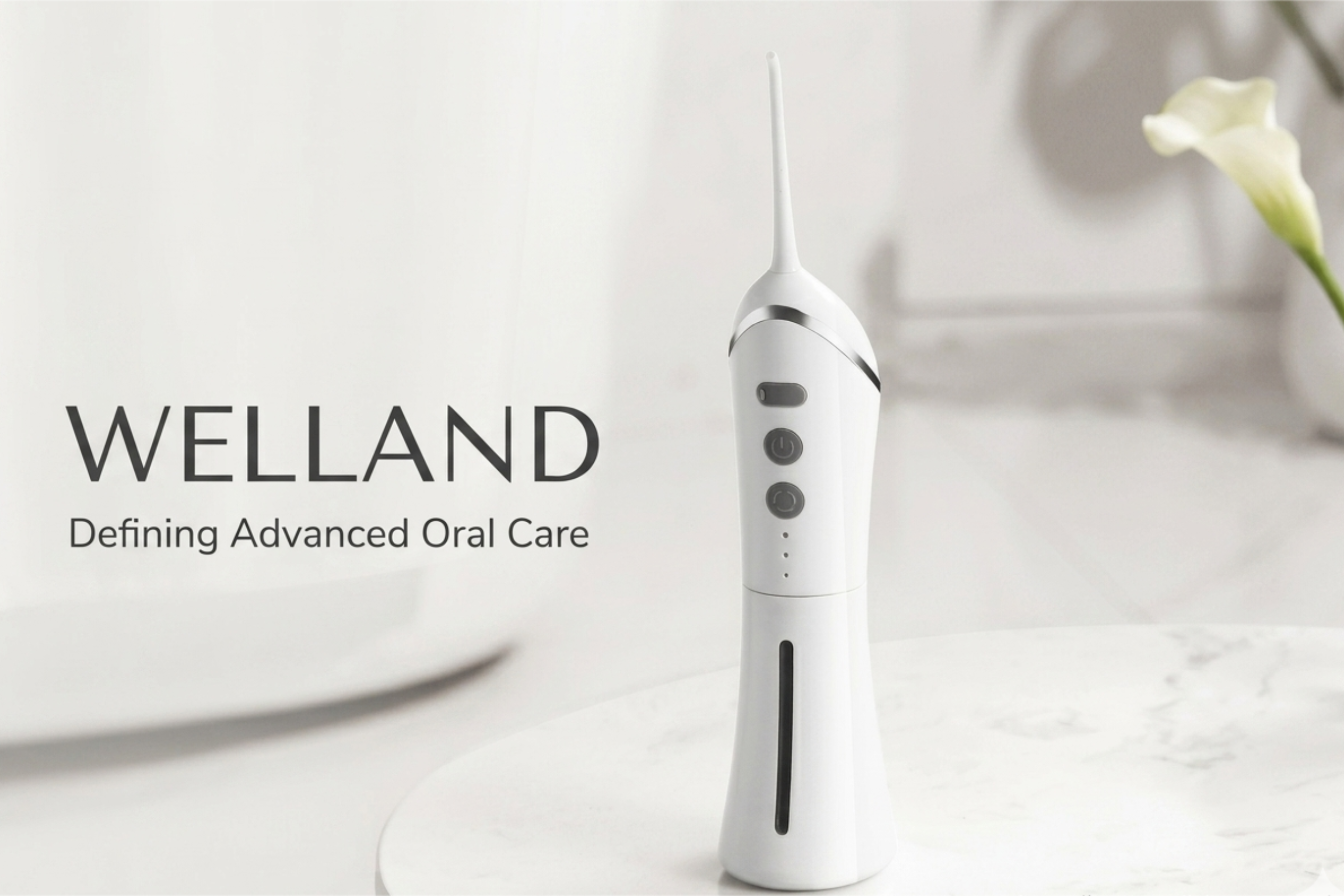
Water tank capacity: A larger tank (200mL or more, like WELLAND’s IPX7 waterproof model), it means there is no need to add water halfway through the teeth flushing process
Portability: Cordless water flosser weighs only about 1 pound and can be put in a travel bag. It is very suitable for business trips, vacations, and even in the office for lunchtime cleaning.
Efficiency: Water flosser removes twice as much plaque in difficult to clean areas as traditional dental floss water flosser, making it ideal for cleaning the inside of teeth.
Cost: High-quality electric water flosser may be more expensive than string floss, but it can be used for several years.
Reservoir refills: A large capacity water tank means that the cleaning process does not require frequent water addition, but it will take up more countertop space.
Learning curve: Mastering the angle of the nozzle for cleaning the inside of teeth requires 1–2 exercises, and there may be a small amount of water splashing onto the mirror at the beginning of the use.
Noise level: Some economic models may produce loud noise, and some may exceed 70 decibels.

Electric Water Flosser (like some sonicare water flosser) offer consistent pressure and large reservoirs. They can provide stable pressure and have a large water tank capacity. This model is very suitable for home use, especially if you need a lot of water to clean the inside of the teeth, or if family members share a device.

Cordless Water Flosser is the ultimate choice for convenience. Charged by USB or charging base, it is compact and light, which is very suitable for quick cleaning during travel, small bathrooms or offices. A water flosser cordless model (like WELLLAND’s) balances power and portability.
Install a fine nozzle that is most suitable for cleaning the inside of teeth, and add warm water to the water tank. If you want to enhance the cleaning and energizing effects, you can add a small amount of mouthwash. Avoid using hot water, and if you are using a new water flosser or a replacement nozzle, please test the water pressure on your hands first.
Starting from the lowest water pressure, place the water flosser at a 45 degree angle to the gum line. Point the nozzle slightly towards the inner surface of the teeth and aim the water flow at the gap between the teeth and gums. Do not directly aim at the gums, as it can cause gum bleeding in severe cases. Keep your mouth slightly open to allow water to flow into the sink, without the need to close your mouth tightly. Patiently clean each tooth, focusing on the inner surface.
Inner Teeth First: Slowly slide the nozzle along the inner surface of each tooth, pausing for 1-2 seconds in each gap. Water should flow between teeth along the gum line. For crowded internal teeth, move the nozzle in a small circular motion to ensure coverage.
Outer Teeth Next: Repeat the same slow sliding motion on the outer surface of the teeth, focusing on the gap between the molars and premolars.
Gum Line Finish: Tilt the nozzle slightly downwards at about 45 degrees to clean the area below the gum line, which is where dental plaque often hides and causes gingivitis. Clean each tooth for 5-10 seconds to ensure that the water flow reaches the bottom of the gum bag.
Total Time: The overall goal is 1-2 minutes. Don’t be in a hurry! Thoroughness is more important than speed, especially for internal teeth with less obvious plaque accumulation.
After use, empty the remaining water in the water tank, remove the nozzle, and rinse the nozzle and water tank with warm water to prevent the growth of mold or bacteria. Before storing, let all components dry completely to maintain the cleanliness and hygiene of the water flosser.
A water flosser works best with other tools:
Toothbrush water flosser: Some models combine toothbrush and flosser, which is very convenient for daily use.
String floss: Use for particularly narrow gaps between teeth.
Mouthwash water flosser: Adding a small amount of mouthwash to the water tank can only improve freshness and cleanliness.
High water pressure, incorrect positioning, neglecting to replace parts:
The most common mistake when using a water flosser is setting the water pressure too high, which can stimulate the gums, cause bleeding, and even damage the enamel. When cleaning the inner surface of teeth, gums are usually more sensitive and need to be adjusted to medium to low water pressure.
Another mistake is holding the nozzle too far from the teeth. The water flow needs to be sprayed directly into the gap to effectively clean the inside of the teeth.
Lastly, neglecting to replace the nozzle is also a common issue. Worn nozzles cannot effectively clean the inner surface of teeth, so it is recommended to set reminders and replace them every 3-6 months.
Neglecting the daily maintenance of a water flosser:
Unclean water flossers may be harmful to oral health as mold or bacteria in the water tank can spread to teeth and gums, causing damage to the teeth. Be sure to clean the water tank and nozzle after each use, and do not let the water in the tank last for several days. If you find scale buildup, you can soak the parts in a mixture of water and white vinegar for 30 minutes, and then thoroughly rinse them. Regular maintenance can ensure the efficient and safe operation of the water flossers.

Versatility: Options include electric water flosser for home use and cordless water flosser for travelling, both of which are perfect for cleaning internal teeth.
Targeted design: The special nozzle is safe for sensitive gums and can effectively clean the internal area of narrow teeth.
Durability:Long battery life, cordless water flosser can be used for more than 2 weeks on a single charge, and its accessories are easy to replace.
Water flosser is an essential tool for many people who want to improve oral hygiene, especially for cleaning the inside of teeth (areas that are often not covered by brushing teeth). By choosing the right type (electric or cordless), mastering the correct usage steps, and avoiding common mistakes, you can maintain healthy teeth and gums for a long time. If you want a reliable and easy-to-use product, WELLAND Water Flosser can meet all your needs. It is efficient, portable, and specifically designed to simplify the internal cleaning of teeth.
Q1: Can a water flosser clean the inside of teeth better than string floss?
A1: Yes! A water flosser can reach 90% of inner tooth spaces (vs. 60% for string floss), especially if you use the correct nozzle and pressure.
Q2: Is a cordless water flosser as powerful as an electric one?
A2: Modern cordless water flosser models (like WELLLAND’s) offer similar pressure to electric electric water flosser options—perfect for inner teeth cleaning on the go.
Q3: Can children use a water flosser?
A3: Yes! As long as the minimum pressure gear is used and under the supervision of adults, children aged 6 and above can safely use the water flossers. The precise positioning of the nozzle is very suitable for children’s small inner gaps of teeth. The gentle water flow is less likely to make children resistant than dental floss, which helps to develop good oral care habits from an early age.
Q4: Can I use mouthwash in my water flosser?
A4: Of course! Adding a small amount of mouthwash to the flusher tank is a good way to improve breath freshness and kill bacteria on the inside of the teeth and gum bags. Just make sure to rinse the water tank thoroughly after use to prevent residue accumulation. Choosing the special mouthwash formula for dental floss has the best effect
Q5: Is WELLLAND’s water flosser suitable for people with sensitive gums?
A5: Yes! WELLLAND water flosser is specially designed for sensitive gums. It provides an adjustable low-pressure gear, which can easily adapt even to the most sensitive mouth. The precise positioning nozzle can release narrow and precise water flow, and will not irritate the gums when cleaning the inside of the teeth.
 EN
EN  RU
RU  PT
PT  FR
FR  ES
ES  KO
KO  JA
JA  DE
DE  ZH
ZH