

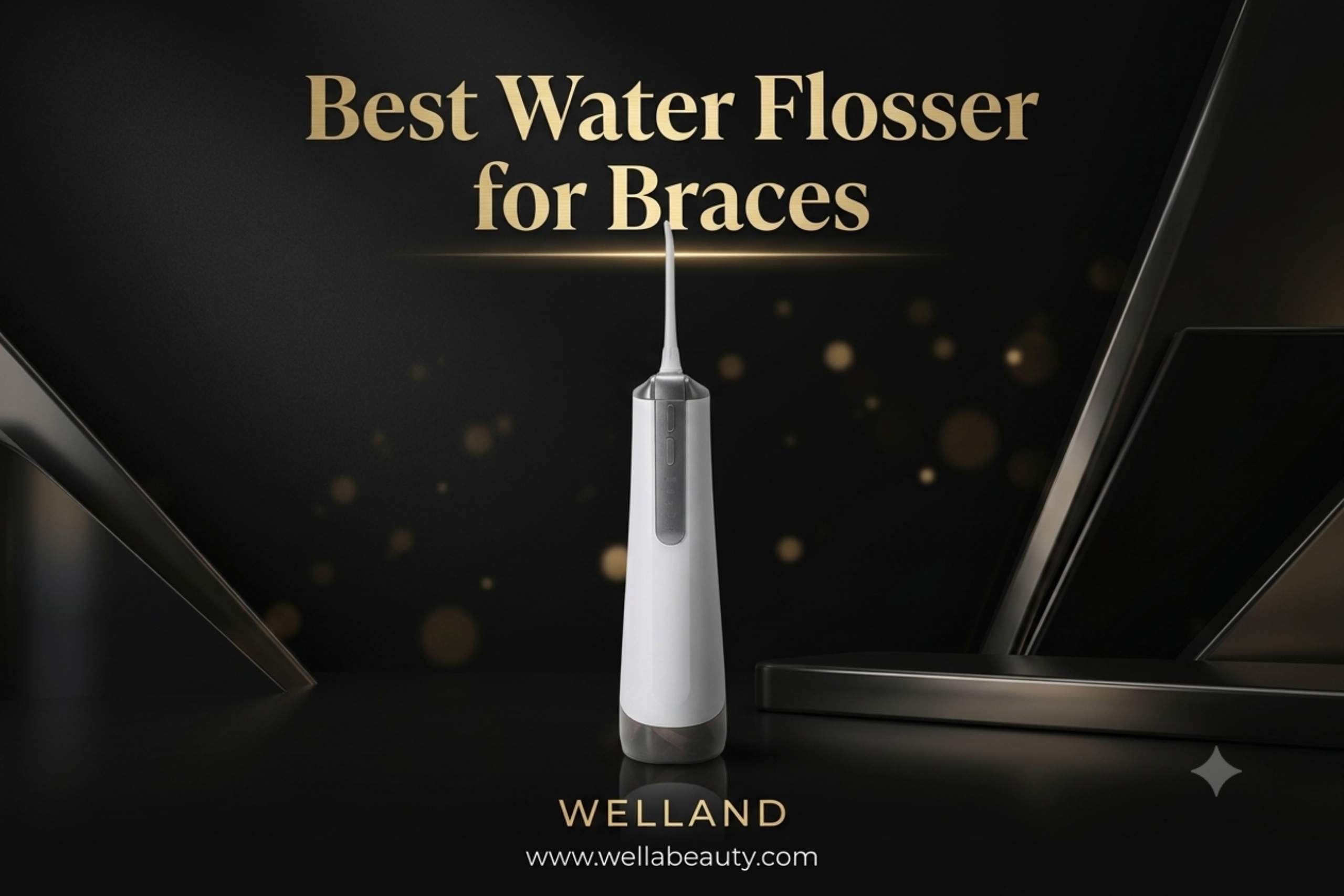
Clinical evidence, feature benchmarks, and sourcing strategy – everything your team needs before placing an OEM order for an orthodontic water flosser.
Orthodontic patients represent one of the fastest-growing segments in the global oral-care market. With braces treatment lasting an average of 18–24 months and plaque control being a documented clinical concern throughout that window, the demand for a reliable orthodontic water flosser is sustained, recurring, and professionally endorsed.
For orthodontic clinics, dental distributors, and private-label brands, stocking or sourcing the best water flosser for braces is not just product selection — it is patient retention, chair-time reduction, and brand differentiation. Patients who manage their oral hygiene well during treatment have better outcomes, fewer emergency appointments, and become vocal brand advocates.
Clinical Evidence
Up to 3× more effective at removing plaque around braces
vs. brushing and string floss combined — the benchmark any 3X effective braces water flosser in your product line should be measured against. (Source: independent clinical study, Waterpik research data; replicated across category competitors.)
This level of clinical efficacy is what separates a water flosser with orthodontic tip from a general-purpose oral irrigator. For OEM buyers, it means the product category carries inherent credibility — you are not creating demand, you are channeling it.
Traditional dental floss requires threading under each archwire — a process that takes 15–20 minutes when done correctly. Clinical compliance data shows that most brace wearers abandon consistent flossing within the first month. This is not a motivation failure; it is a mechanical one. Brackets create overhangs and recesses that string floss cannot reliably reach, and a floss threader does not solve the problem at the bracket-gumline interface.
Water flossing changes the equation. Using an optimal combination of pressure and pulsation, a quality orthodontic water flosser:
The combination of pressure and pulsation — not pressure alone — is the mechanism. This is why products in the category differ meaningfully in clinical performance, and why tip geometry and pressure range are the two most important engineering variables for any OEM orthodontic water flosser.
The market benchmarks below are drawn from the top-ranked products in the category, including the Waterpik Aquarius, Waterpik Cordless Advanced, Waterpik Cordless Express, and the Philips Sonicare Power Flosser 3000. For OEM buyers, these represent the specification floor — the minimum your product must meet to be competitive.
| Feature | Market Standard | Welland OEM Capability |
|---|---|---|
| Orthodontic Tip Included | Yes (tapered brush tip) | ✓ Custom tip geometry available |
| Pressure Settings | 3–10 levels (40–100 PSI) | ✓ 3–12 settings configurable |
| Flossing Modes | 2–4 modes (floss, massage, pulse) | ✓ Multi-mode firmware customizable |
| Reservoir Capacity | 150ml–650ml | ✓ 200ml–600ml range |
| Cordless / Countertop | Both formats in market | ✓ Both formats available for OEM |
| Waterproof Rating | IPX7 (shower-safe) | ✓ IPX7 standard |
| Battery Life | 2–4 weeks typical | ✓ Up to 60-day configurations |
| Kids / Junior Version | Lower max PSI, fun design | ✓ Water flosser for kids SKU available |
| Certifications | ADA, CE, FDA | ✓ CE, FDA, BSCI, ISO, RoHS |
The choice between a countertop and a cordless water flosser for braces is not purely technical — it is a channel and positioning decision. Here is how B2B buyers should frame it:
Countertop units like the Waterpik Aquarius and the advanced water flosser category feature larger reservoirs (22 fl oz / 650 ml), 10 pressure settings, and the full range of flossing modes. For orthodontic clinics distributing a take-home kit at the start of treatment, a countertop model signals clinical authority and supports full-mouth coverage without mid-session refills. The per-unit cost is higher, but so is perceived value — critical for private-label positioning in the premium segment.
A cordless water flosser for braces trades reservoir size for portability and compliance. Models equivalent to the Waterpik Cordless Advanced are IPX7 waterproof (shower-safe), rechargeable, and compact enough for a school bag. For brands targeting teens, travel-retail buyers, or subscription-box channels, this format produces better daily use compliance — which is the metric that matters for outcome-based marketing claims. The Waterpik Cordless Express equivalent is the entry-level price point for volume OEM programs.
Best For
Countertop OEM
Orthodontic clinics, premium dental retail, family practice bundles, brushing and flossing compliance programs
Best For
Cordless OEM
Teen brands, travel retail, e-commerce DTC, subscription boxes, orthodontic starter kits
The single feature that differentiates a general oral irrigator from the best water flosser for braces overall is the orthodontic tip. A tapered brush tip is engineered to:
For OEM buyers, the orthodontic tip is also a recurring revenue opportunity. Tips should be replaced every three months — aligning with a standard orthodontic adjustment cycle. Clinics that distribute a branded water flosser with orthodontic tip at the start of treatment can offer a tip replenishment program, creating a patient-retention touchpoint that extends well beyond the initial product sale.
The removing plaque efficacy of the tip is what enables any compliant braces water flosser to be marketed as a 3X effective braces water flosser against the clinical benchmark — a claim that resonates with both clinicians recommending the product and patients receiving it.
Every water flosser operates on the principle of pressure and pulsation — but not all implement it the same way. For orthodontic use, the specification requirements are more demanding than for general oral care:
The Philips Sonicare Power Flosser 3000‘s Quad Stream tip distributes pressure across a fanned pattern — an alternative to single-stream designs that some users find more comfortable on inflamed tissue. For OEM development, tip geometry and stream pattern are variables that can be engineered to a specific clinical outcome or end-user preference. Welland’s engineering team offers both single-stream and multi-stream nozzle configurations as part of our OEM water flosser for orthodontic clinics program.
For clinics including this guide in a patient take-home kit, or for brands producing accompanying content, here is the clinician-approved usage protocol:
Recommended frequency: once daily, after the largest meal. Session time: under two minutes with a properly fitted orthodontic tip. This protocol applies equally to the advanced water flosser countertop format and any cordless water flosser for braces in a portable form factor.
For B2B buyers evaluating a water flosser for braces OEM program, the decision framework has four components:
Does the platform support a family of tips — standard, orthodontic, periodontal, tongue cleaner — that can be sold as accessories and upsells? A monoculture tip system limits LTV. Welland’s platform supports universal tip compatibility across product families, enabling multi-SKU programs from a single base unit.
North American and European clinical guidelines differ slightly in recommended pressure ranges. An OEM water flosser for orthodontic clinics should be pressure-calibrated to the market’s standard of care, not the manufacturer’s default. Welland offers market-specific firmware configuration as standard.
CE and FDA clearance are table stakes. Buyers targeting dental professional channels should also confirm BSCI, ISO 13485, and relevant regional certifications. A gap in certification coverage delays clinical procurement approvals by 6–12 months.
Clinic-channel buyers often need smaller initial orders with branded packaging for trial programs. Standard OEM MOQs in this category are 3,000 units — but pilot programs for clinical distribution networks benefit from 500–1,000 unit runs with full custom branding. Confirm this flexibility before committing to a manufacturing partner.
Related Reading
→ How to Use a Water Flosser: A Complete Guide for a Healthier Smile
Use the quick-reference selector below to match your channel to the right product format:
The defining feature is the orthodontic tip — a tapered brush tip engineered to seat between brackets and direct water under the archwire. General-purpose tips clean the gumline but miss the bracket-edge interface where plaque accumulates most during orthodontic treatment. The optimal combination of pressure and pulsation also needs to be calibrated for inflamed, post-adjustment gum tissue.
For daily orthodontic maintenance, yes — provided the cordless model reaches at least 90 PSI maximum pressure and includes an orthodontic tip. Countertop units with 10 pressure settings offer finer control for users with highly variable gum sensitivity, but the compliance advantage of a cordless format (no cord, shower-safe, travel-friendly) often delivers better real-world outcomes because the device gets used every day.
Always start at the lowest available setting and increase over one to two weeks as gum tissue adapts. On post-adjustment days — when brackets and gums are tender — drop back to the lowest comfortable level. Discomfort is the primary reason patients abandon the habit, so pressure calibration is a clinical compliance issue, not just a comfort preference.
A water flosser with orthodontic tip replaces the floss threader and handles gumline and bracket debris far more effectively than string floss. It does not fully replicate the contact-scraping action of string floss at tight interproximal contacts. The recommended protocol for orthodontic patients is: daily water flossing plus string floss at tight contacts two to three times per week, alongside regular brushing and flossing for full-surface coverage.
Every three months — aligned with standard orthodontic adjustment intervals. For OEM programs distributed through orthodontic clinics, a tip replenishment cycle creates a natural patient recall touchpoint and a recurring revenue stream for the clinic.
Standard OEM MOQ in the water flosser category is typically 3,000 units for full custom branding. Welland supports pilot programs for clinical distribution networks at lower volumes with full private-label packaging — contact our B2B team to discuss program-specific minimums.
For North American clinical channels: FDA 510(k) clearance or a compliant regulatory pathway. For European distribution: CE marking under MDR 2017/745 for Class I medical devices and IEC 60601-1 for electrical safety. BSCI and ISO 9001/13485 are commonly required by procurement teams at hospital and clinic networks. Welland products carry CE, FDA, BSCI, ISO, and RoHS certifications.
Yes. A water flosser for kids typically features a maximum pressure of 60–80 PSI (lower than the adult standard of 100 PSI), a smaller reservoir, a thinner handle for smaller hands, and colorway options designed to increase compliance in younger users. For pediatric orthodontic practices, a kids-specific SKU alongside an adult model is the recommended two-product strategy.
Orthodontic hardware creates new bacterial reservoirs around brackets and under archwires that standard brushing cannot reach. The pulsating stream of a water flosser disrupts this biofilm and reaches 2–3 mm subgingivally — below the gumline — simultaneously massaging gum tissue and improving circulation. This reduces gingivitis risk, a common complication of orthodontic treatment, and protects enamel from decalcification throughout the treatment window.
Yes. Welland’s OEM program includes firmware-level customization of pressure ranges, flossing modes, pulsation patterns, and LED/timer feedback. Clinics that have a specific post-adjustment protocol or a branded cleaning routine can have those parameters built into the device firmware — creating a product that is genuinely differentiated from off-the-shelf alternatives and reinforces the clinic’s clinical brand.
Welland OEM Program
Welland delivers CE- and FDA-certified OEM water flossers with custom branding, orthodontic tip configurations, and clinical-grade firmware — built for orthodontic clinics, dental retailers, and private-label brands at scale.
MOQ 3,000 units | Custom branding | CE · FDA · BSCI · ISO certified
How to Use a Water Flosser: A Complete Guide for a Healthier Smile
Step-by-step protocol for patients and end users — ideal companion content for clinic distribution.
Water Flosser vs. Dental Floss: Which Is More Effective for Braces?
Clinical comparison content that drives SEO for informational queries and establishes brand authority in the orthodontic oral-care space.
Cordless vs. Countertop Water Flosser: Which Should You Source for Your Brand?
Channel-specific product decision guide. Target keywords: “cordless water flosser OEM,” “countertop water flosser manufacturer.”




 EN
EN  RU
RU  PT
PT  FR
FR  ES
ES  KO
KO  JA
JA  DE
DE  ZH
ZH