

At a Glance
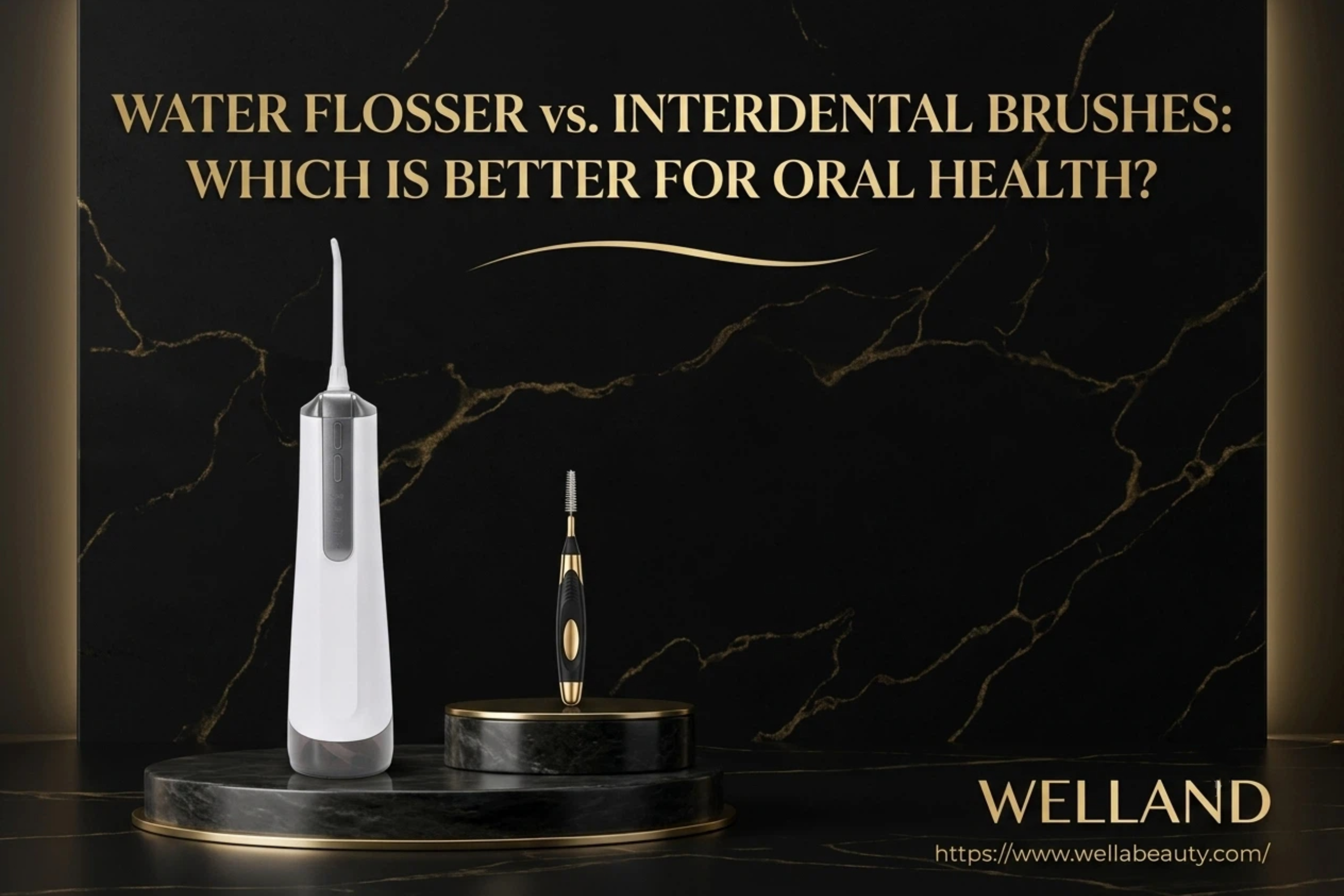
Water Flosser
Best for braces, implants, sensitive gums, and users with dexterity challenges. Reaches deep below the gumline via a pulsating stream of water.
Interdental Brush
Best for wider gaps, bridgework, and users who prefer a tactile, mechanical clean. Available in sizes ISO 00 (0.35 mm) to ISO 8 (1.5 mm+).
Best Strategy
Use both. Combining water flossing and interdental cleaning delivers the most comprehensive plaque removal and gum disease prevention.
The spaces between your teeth account for nearly 40% of each tooth’s surface area — zones that a toothbrush simply cannot reach. That single fact has made interdental cleaning one of the fastest-growing segments in oral care retail. For distributors and buyers sourcing products at scale, understanding the difference between a water flosser and interdental brushes is not just academic: it directly shapes which SKUs move fastest, which products generate repeat purchases, and how to position your brand.
This guide draws on clinical research and market data to give you an authoritative, honest comparison — covering interdental brush effectiveness, water flosser plaque removal, device suitability, and sourcing considerations for private-label buyers.
Food particles and plaque accumulate in the tight spaces between teeth every single day. Left unchecked, that build-up triggers a cascade of problems: gum disease, tooth decay, bad breath, and ultimately bone loss. The American Dental Association recommends cleaning between teeth at least once daily, and the global market has responded with two principal tool categories — water flossers and interdental brushes — alongside traditional dental floss.
Each tool targets the same root problem — remove plaque and debris from interdental spaces — but they do so through fundamentally different mechanisms, which is why the choice matters.
A water flosser (also called an oral irrigator) generates a pulsating stream of water under controlled pressure, directed between teeth and along the gumline through a narrow tip. The pulsation does two things simultaneously: it dislodges food particles and loosens plaque biofilm, while the water flow flushes debris out of the pocket.
Premium models — like Welland’s cordless water flosser range — offer multiple pressure modes, interchangeable nozzle tips (orthodontic, implant-specific, tongue-cleaning), and IPX7 waterproof certification for use in the shower or while travelling. This versatility makes the water flosser for plaque removal particularly well-suited to users with complex oral situations.
Clinical research consistently shows that water flossers are comparable to interdental brushes in removing plaque and significantly more effective than string floss alone for reducing gingival inflammation and bleeding. Studies demonstrate marked benefits for patients with dental implants, orthodontic appliances, and gum disease — populations that form a substantial and growing share of the adult oral care market.
Interdental brushes are small, bristle-tipped cleaning tools designed to physically scrub the contact surfaces between teeth. Unlike the fluid dynamics of a water flosser, the brush bristles make direct mechanical contact with the tooth surface, which makes them particularly effective at scraping away sticky, adherent plaque in wider interdental spaces.
Size matching is critical. An incorrectly sized brush either fails to clean effectively or risks injuring the gum tissue. Below is the standard ISO sizing framework used across the category:
| ISO Size | Wire Diameter | Best For |
|---|---|---|
| ISO 0 / 1 | 0.35 – 0.45 mm | Very tight spaces, first-time users |
| ISO 2 / 3 | 0.50 – 0.60 mm | Average interdental gaps |
| ISO 4 / 5 | 0.70 – 0.80 mm | Wider gaps, around bridgework |
| ISO 6 / 7 / 8 | 1.0 – 1.5+ mm | Implant cleaning, large gaps post-treatment |
For retail buyers, stocking a multi-size assortment or clearly labelled starter packs reduces consumer confusion and returns — a direct margin benefit. Dental professionals typically advise patients to begin with the largest size that fits comfortably without forcing, then step down to smaller sizes for tighter gaps.
| Feature | Water Flosser | Interdental Brush |
|---|---|---|
| Plaque removal (loose debris) | ★★★★★ | ★★★★☆ |
| Sticky plaque scraping | ★★★☆☆ | ★★★★★ |
| Gum disease management | ★★★★★ | ★★★★☆ |
| Ease of use / dexterity | ★★★★★ | ★★★★☆ |
| Suitable for tight spaces | ★★★★☆ | ★★★☆☆ |
| Dental implant cleaning | ★★★★★ | ★★★★☆ |
| Portability (no power) | ★★★☆☆ | ★★★★★ |
| Unit cost (consumer) | Higher (device) | Lower (consumable) |
| Repeat purchase rate | Medium (tip refills) | High (monthly packs) |
The floss vs. interdental debate often ignores context. In practice, the right tool depends on the individual’s dental anatomy, restoration history, and lifestyle. As a retailer or buyer, training your floor staff — or packaging your product with clear consumer guidance — is a meaningful differentiator.
Choose a water flosser when: the consumer has braces, dental implants, a history of gum bleeding, limited dexterity, or finds traditional flossing uncomfortable. The water floss mechanism is also ideal for flushing medicated mouthwash deep into gum pockets.
Choose an interdental brush when: the consumer has wider gaps, bridgework, or prefers a portable, battery-free tool. Interdental brushes excel at mechanical plaque disruption in spaces where a stream of water alone may not deliver enough abrasive action.
Use both when: the goal is optimal oral health. Clinical evidence and leading dental hygienists agree — combining a water flosser and interdental brushes provides the most comprehensive interdental cleaning routine available outside the dental chair. From a retail perspective, this is also a natural upsell strategy: position the two products as a system rather than alternatives.
For chain pharmacies, supermarkets, and e-commerce operators navigating the retailer guide water flosser interdental brush sourcing decision, several factors determine long-term category success:
Quick Decision Tool
Does your customer have braces, implants, or gum sensitivity?
→ Recommend a Water Flosser
Does your customer have wider gaps or bridge/crown work?
→ Recommend an Interdental Brush (ISO 4–8)
Does your customer want comprehensive protection against tooth decay and bad breath?
→ Recommend Both as a System
The honest answer to which is better water flosser or interdental brush is: it depends — and increasingly, the answer is both. Water flossers deliver superior performance for gum health, dental implant care, and ease of use. Interdental brushes provide unmatched mechanical plaque disruption in wider interdental spaces. Together, they form the gold standard in daily interdental cleaning that protects against tooth decay, gum disease, and bad breath.
For retailers and distributors, this is commercially advantageous: stocking both categories deepens basket size, increases repeat purchase frequency, and positions your brand as a credible oral care authority rather than a commodity commodity player.
Welland has been manufacturing precision oral care devices since 2018, supplying cross-border e-commerce operators, chain retailers, and private-label brands worldwide. Our water flossers carry CE, RoHS, FCC, and ISO 9001 certification — and our OEM/ODM team is ready to help you build a product line that stands out on shelf.
Ready to Stock the Category Leader?
CE • FCC • RoHS • ISO 9001 certified manufacturing. Custom branding. Competitive MOQ. Proven export experience across 30+ markets.



 EN
EN  RU
RU  PT
PT  FR
FR  ES
ES  KO
KO  JA
JA  DE
DE  ZH
ZH