



The brush head is the one component your end customer touches, replaces, and ultimately judges your product by. Yet too many B2B buyers treat material selection as a line-item footnote in their sourcing spec sheet. That’s an expensive oversight. The bristle material on an electric cleaning brush head drives cleaning performance, surface safety, product lifespan, and—critically—your repeat-purchase revenue from replacement head sales. This guide compares the three most commercially relevant brush head materials available today: nylon, brass, and silicone. By the end, you’ll know exactly which material mix fits your brand’s product line and target market.
When you source electric cleaning brush kits, the motor, battery, and housing usually get the most attention during spec reviews. But here’s what actually determines whether your customer comes back: the brush head. It’s the consumable. It’s the replacement part. It’s where your recurring revenue lives.
A buyer who purchases a cordless power scrubber returns for replacement brush heads every 4–8 weeks. If the bristle material doesn’t match the cleaning task—too soft and it underperforms, too aggressive and it scratches surfaces—you lose that repeat purchase. The customer blames the product, not the material spec, and switches brands.
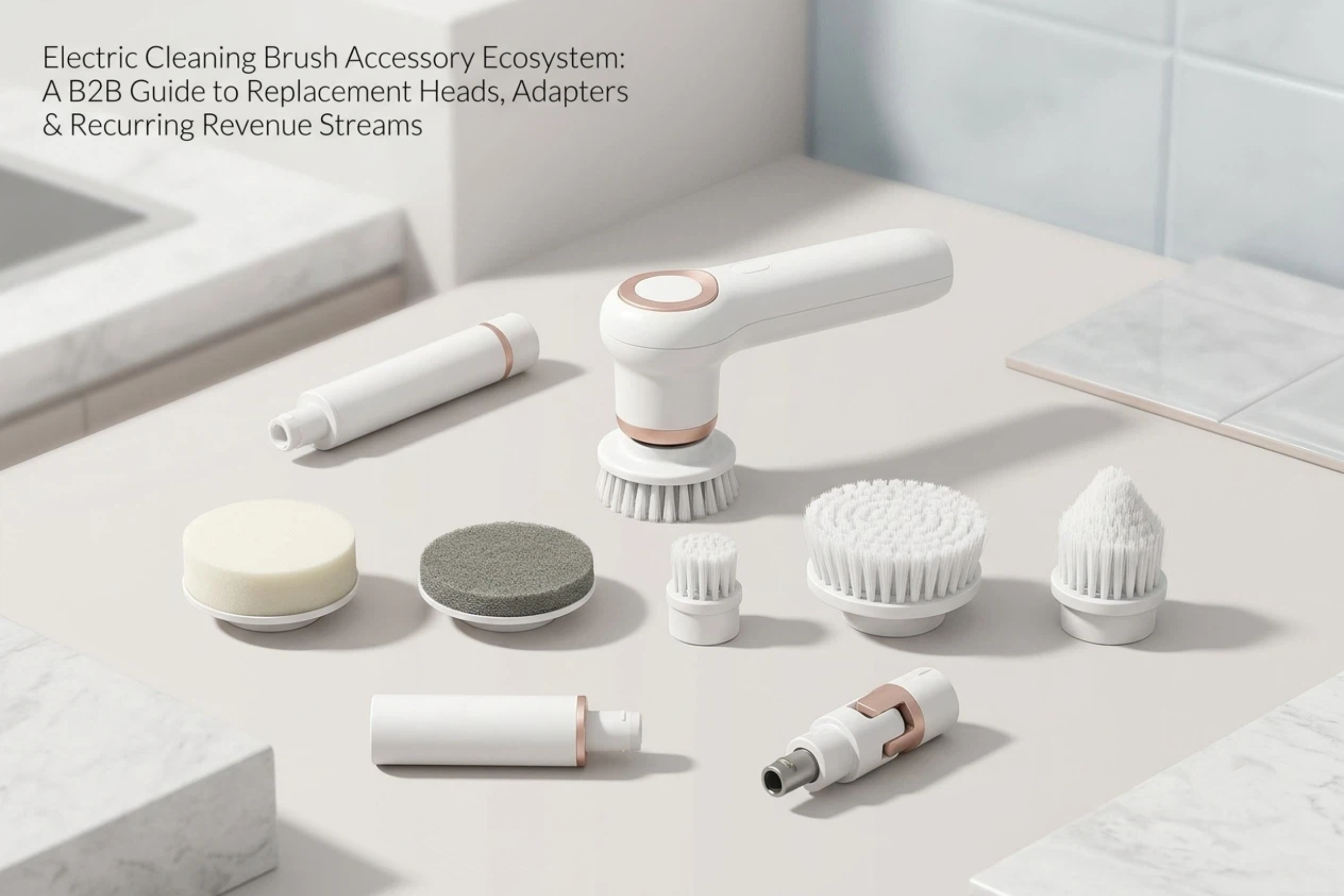
This is why material selection should happen during the initial product definition stage, not as a last-minute packaging decision. Whether you’re running a custom OEM/ODM program or selecting from existing electric cleaning brush kit configurations, the brush head material you choose shapes your product’s market positioning, warranty exposure, and accessory ecosystem.
Consider this: a single SKU with the wrong bristle stiffness for its target market can generate return rates 3–4× higher than a properly spec’d product. That’s not a quality control problem—it’s a material specification problem that traces back to the sourcing stage.
Nylon is the default bristle material in the electric cleaning brush industry, and for good reason. It’s synthetic, meaning consistent quality batch to batch. It’s available in a wide stiffness range. And it handles the broadest set of cleaning tasks without specialist drawbacks.
Nylon bristles are extruded from polyamide polymers—typically PA6, PA66, or PA612. The grade you select determines stiffness, recovery rate (how fast the bristle snaps back after bending), and heat resistance. For electric cleaning brush applications, three commercially relevant stiffness grades dominate the market:
Nylon’s versatility is its strongest commercial argument. A single medium-nylon brush head can cover bathroom, kitchen, and general household cleaning—making it the default inclusion in any multi-head kit. For B2B buyers, this means lower SKU complexity, simpler inventory management, and fewer customer complaints about “wrong head for the job.”
When specifying nylon brush heads for OEM orders, pay attention to three specs that separate reliable suppliers from commodity vendors:
WELLAND offers full OEM/ODM customization for electric cleaning brush kits — including nylon, brass, and silicone head options. MOQ from 3,000 pcs. CE, RoHS & FCC certified.
Brass occupies the middle ground between nylon’s versatility and aggressive wire brushes. It’s a metal bristle—but a soft one. Brass won’t scratch most surfaces the way steel would, yet it cuts through grime that nylon simply bounces off.
Brass brush heads use fine brass wire (typically 0.10–0.15mm diameter) that’s harder than nylon but softer than steel. This unique hardness profile makes brass ideal for removing rust, mineral deposits, carbon buildup, and other hardened grime without gouging the underlying surface.
The key property to understand is brass’s Mohs hardness—around 3 to 4. That’s softer than glass, ceramic tile, and most metals, which means brass bristles can scrub these surfaces aggressively without leaving scratches. But it’s hard enough to dislodge calcified deposits, soap scum, and corrosion that nylon can’t touch.
Brass is not food-safe in most regulatory contexts. If your product line targets food-contact surfaces, brass brush heads should carry clear labeling and usage guidelines. Additionally, brass bristles can shed over time—particularly with cheaper manufacturing methods—so the quality of the bristle anchoring system matters significantly. A shed brass wire embedded in a cleaning surface is a liability issue you want to avoid.
Silicone is the newest entrant in electric cleaning brush head materials, and it’s gaining rapid traction in markets that prioritize surface protection, food safety, and hygiene.
Unlike nylon and brass, silicone bristles are molded, not extruded or wired. This means the bristle pattern, density, and geometry can be precisely engineered for specific applications. Silicone is also non-porous—unlike nylon, which absorbs moisture at a molecular level—making it inherently more hygienic and faster to dry.
Three material properties set silicone apart for B2B sourcing decisions:
WELLAND’s electric cleaning brush kits ship with configurable head materials, full CE/RoHS/FCC compliance, and ISO 9001 quality systems. 800+ global B2B partners trust our supply chain.
Here’s a side-by-side breakdown to help you evaluate all three materials against the criteria that matter most for B2B sourcing decisions.
| Property | Nylon | Brass | Silicone |
|---|---|---|---|
| Bristle Type | Extruded polymer | Metal wire | Molded elastomer |
| Mohs Hardness | Variable (grade-dependent) | 3–4 | Shore A 30–80 |
| Surface Safety | Soft to medium grades safe on most surfaces | Safe on hard surfaces; avoid soft metals | Safe on all surfaces including non-stick |
| Best For | General household cleaning | Rust, mineral deposits, carbon | Delicate surfaces, food prep |
| Temperature Limit | ~80°C (varies by grade) | High (metal) | 230°C |
| Food-Safe Rating | Depends on grade & additives | No (not food-contact rated) | Yes (FDA/LFGB grades available) |
| Moisture Absorption | Moderate (porous at molecular level) | None | None (non-porous) |
| Unit Cost (volume) | $0.08–$0.15/head | $0.15–$0.25/head | $0.20–$0.40/head |
| Tooling Cost (OEM) | Low (existing tooling common) | Low–moderate | $1,500–$5,000 (custom mold) |
| Lifespan (residential) | 4–8 weeks | 6–12 weeks | 3–6 months |
| Key Certifications | RoHS (plasticizer compliance) | RoHS (lead content ≤0.1%) | FDA / LFGB (food-grade grades) |
Most successful electric cleaning brush brands don’t pick one material—they offer a kit with multiple head types. The question isn’t “nylon OR brass OR silicone” but “what combination serves your target market and price point?”
Use this matrix to match your primary use case to the recommended brush head material:
| Target Cleaning Scenario | Recommended Material | Why |
|---|---|---|
| General bathroom & kitchen cleaning | Medium nylon | Best balance of cleaning power and surface safety |
| Grout lines & tile joints | Hard nylon | Stiff enough to dig into narrow gaps without metal contact |
| Rust & mineral deposits on metal | Brass | Cuts through hardened deposits; softer than steel so won’t gouge |
| Non-stick cookware | Silicone | Won’t damage coating; food-grade certified |
| Glass & glossy surfaces | Soft nylon or silicone | Both prevent scratching; silicone adds heat resistance |
| Heavy-duty degreasing (industrial kitchen) | Hard nylon + brass combo | Nylon for bulk grime; brass for baked-on carbon |
| Baby products & food-prep surfaces | Silicone (FDA/LFGB grade) | Non-porous, hygienic, certified food-safe |
For brands entering the market: Start with a 3-head kit (medium nylon + hard nylon + brass). This covers roughly 90% of household cleaning scenarios and keeps tooling costs manageable. You can add silicone heads as a premium accessory SKU once you’ve validated demand. See how this compares to manual alternatives in our electric cleaning brush vs manual brush analysis.
For premium positioning: Lead with a 4–5 head kit including silicone. The inclusion of silicone justifies a higher retail price point ($35–55 vs. $20–35) and differentiates your product from commodity kits on Amazon and retail shelves. Premium kits also generate stronger accessory attach rates at checkout.
For industrial or commercial buyers: Prioritize hard nylon and brass. Silicone is rarely relevant in heavy-duty cleaning contexts, and the higher unit cost doesn’t deliver proportional value. Focus your spec sheet on motor torque, RPM, and bristle anchoring quality instead.
From nylon to brass to silicone, WELLAND helps B2B brands configure the perfect brush head mix for their target market. Full OEM/ODM support from design to mass production.
Regardless of material, all brush heads in electric cleaning brush products must comply with the certifications required for your target markets. For EU import: CE, RoHS, REACH. For US import: FCC, and FDA registration if you make food-contact claims. For both markets: an IPX waterproof rating on the brush unit itself.
Understanding CE, RoHS, and FCC certification requirements is essential—non-compliant materials at the bristle level can cause entire shipments to fail customs inspection. Brass with excess lead content, nylon using non-compliant plasticizers, or silicone lacking food-grade documentation can all trigger compliance failures that cost weeks of delay and thousands in remediation.
Always request material test reports (MTR) from your supplier for every bristle material used in your product. A reliable manufacturer provides full material documentation as part of standard OEM/ODM service. For guidance on evaluating supplier quality systems, see our 20-point factory evaluation checklist.
Brush head material directly impacts your unit cost and MOQ structure. Here’s what to budget for:
For a detailed breakdown of OEM vs ODM cost structures—including tooling, certification, and sampling costs—see our guide on electric cleaning brush OEM vs ODM manufacturing models. And for a broader look at WELLAND’s production capabilities, our OEM/ODM manufacturing overview walks through the full process from RFQ to shipment.
Hard nylon (0.25mm+ diameter) is the best choice for grout lines. It’s stiff enough to dig into narrow gaps and dislodge mold and soap scum without the risk of scratching surrounding tile glaze. Brass can work for severe cases, but test on a small area first—some glazed tiles are softer than expected.
Yes. WELLAND supports multi-material brush head configurations within a single OEM order. Most B2B clients specify a kit with 3–5 heads across nylon, brass, and silicone to cover different cleaning scenarios. MOQ applies per head type, not per material.
Standard MOQ is 3,000 pieces per SKU for WELLAND’s electric cleaning brush kits. Custom brush head materials or unique bristle specifications may require a higher MOQ depending on tooling and material sourcing requirements. Contact our team for specific MOQ details on your configuration.
Under normal residential use, nylon heads last 4–8 weeks, brass heads 6–12 weeks (metal bristles are more durable but can shed over time), and silicone heads 3–6 months. Silicone’s longer lifespan is a selling point for premium kits, but it also means lower replacement-head revenue—factor this into your accessory strategy.
Food-grade silicone brush heads (FDA or LFGB certified) are food-safe and suitable for cleaning cookware, food-prep surfaces, and baby products. Always verify the certification level with your supplier—standard industrial silicone is not food-grade. WELLAND offers FDA-compliant silicone options for OEM orders targeting kitchen-use product lines.
Nylon bristles should comply with RoHS (plasticizer restrictions). Brass wire must meet RoHS lead content limits (≤0.1%). Silicone intended for food-contact use requires FDA or LFGB certification. All materials should be documented with material test reports (MTR) from your supplier.
Specify bristle diameter (in millimeters) as the primary stiffness metric. Soft: 0.15–0.20mm. Medium: 0.20–0.25mm. Hard: 0.25–0.30mm and above. Also specify whether you want crimped or straight bristles—crimped holds cleaning solution better, straight delivers more direct scrubbing force.
Yes. Our R&D team can evaluate alternative materials such as PBT, PP, horsehair, or blended bristle composites based on your product requirements. Custom material development typically requires a longer lead time (90–150 days) and may involve additional tooling costs. Contact our engineering team to discuss your specification.
The right brush head material isn’t about finding the single “best” option—it’s about matching the material to your market, your price point, and your long-term accessory strategy. Nylon delivers volume and versatility. Brass handles the jobs nylon can’t. Silicone opens premium retail channels and food-safe positioning. Most successful brands offer a combination, using the kit format to cover multiple cleaning scenarios while building a replacement-head revenue stream that compounds over time. If you’re ready to spec your next electric cleaning brush line, WELLAND’s engineering team can help you configure the right material mix from day one.
 EN
EN  RU
RU  PT
PT  FR
FR  ES
ES  KO
KO  JA
JA  DE
DE  ZH
ZH