

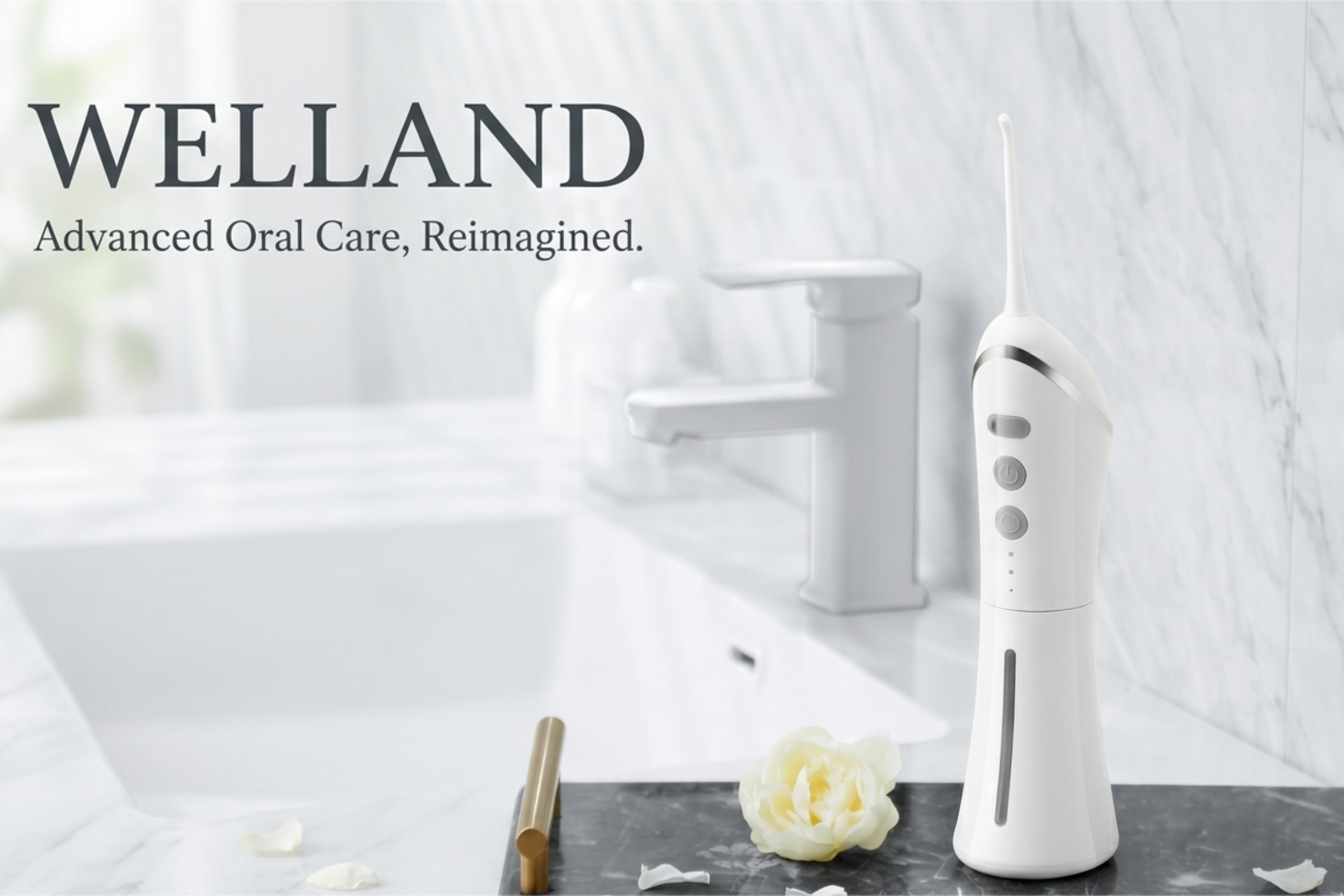

A bright, healthy smile isn’t just about brushing your teeth; it also requires cleaning the crevices that a toothbrush can’t reach. For decades, dental floss has been the go-to tool for removing plaque and tartar, but modern technology has brought a convenient alternative— water flossers. If you’ve ever wondered, “Are water flossers really better?”, this in-depth comparison of water flossers and dental floss will help you understand the differences and choose the option best for your oral health.


A waterflosser is an oral hygiene device that uses pressurized, pulsating water to clean between teeth and along the gum line. It removes food debris, flushes away bacteria, and helps reduce gum inflammation. Brands like Welland offer cordless, countertop, and portable models to meet different lifestyle needs.

Dental floss is a fine thread made of nylon or Teflon used to manually scrape away plaque and food debris from the surface of teeth and below the gum line. Dental floss comes in various versions, including waxed, wax-free, flavored, and environmentally friendly options, and remains the gold standard for mechanical plaque removal.

Water flossers work by using a pump to generate pressurized, pulsating water that is then sprayed through a special nozzle onto the interdental spaces and along the gum line. The steady water flow helps remove food debris, bacteria, and loose plaque. The pulsation also gently massages the gums, improving blood circulation and promoting gum health. Most models, including the Welland water flosser, offer adjustable pressure settings, allowing users to customize their cleaning experience for sensitive gums or deep cleaning needs.
Dental floss works on a simple yet effective basis: a thin nylon or Teflon floss is inserted between the teeth and moved up and down to scrape away plaque, bacteria, and food debris from the tooth surface and below the gum line. This direct contact can remove sticky plaque that cannot be completely removed by water alone. To maximize the effectiveness of dental floss, it should be bent into a “C” shape, wrapped around each tooth, and then gently slid under the gum line, ensuring that the floss makes contact with as much of the tooth surface as possible without damaging the gums.
Water flossers use pulsating water to flush away food debris and bacteria, and clean the gum line. This water pressure is especially effective for cleaning deep periodontal pockets and the area around braces.
Dental floss – a thin, thread-like material used to directly scrape away plaque from the surface of teeth. The friction between the floss and the enamel is unparalleled in removing sticky plaque and biofilm.
Water flossers effectively reduce gum bleeding and inflammation; studies show that for some users, they can improve gum health by up to 50%. However, they may not remove all tightly adhered plaque.
Dental floss remains the gold standard for mechanically removing plaque, especially for sticky deposits that may not be removed by water pressure alone.
Water flossers are highly recommended for people with braces, bridges, crowns, implants, or periodontal pockets (where floss cannot easily reach). They clean around the wires and brackets without causing damage.
Dental floss can be used in most cases, but it can be difficult for people with braces or closely spaced teeth without a flosser or special tools.
Water flossers offer a gentle, soothing massage effect that stimulates blood circulation in the gums. Adjustable pressure settings help prevent discomfort.
Dental floss – if used too forcefully, it can cause bleeding or pain, especially for people with sensitive gums or inflamed tissues.
Water flossers are relatively large and require water and electricity, but there are also cordless travel-sized models available.
Dental floss – extremely portable; it can be put in a pocket or bag for convenient use anytime, anywhere.
Water flossers have a higher initial investment (usually $30 to over $100), plus the cost of replacing brush heads every few months. The water tank and nozzle need to be cleaned to prevent bacterial growth.
Dental floss – cheap and disposable; requires no cleaning or maintenance.
Water flossers are often faster for people who need complex dental treatments because they can quickly clean multiple surfaces.
Flossing – may take longer, especially for beginners or people with closely spaced teeth.
Water flossers are reusable, but they consume electricity and water; the replacement heads are made of plastic.
Dental floss – for single use only, usually made of non-biodegradable materials, but there are also environmentally friendly dental floss options available.
Water flossers are easy to use; simply fill the tank, adjust the pressure, and guide the floss tip along the gum line. No special skills are required, making them ideal for children, the elderly, or people with mobility issues.
Dental floss – requires the right technique to be effective and avoid gum damage. You must wrap the floss properly, insert it gently, bend it into a “C” shape, and then scrape along the surface of your teeth.

| aspect | Water flosser | Dental floss |
| Cleaning methods | Use a pulsating water flow to rinse away debris and bacteria between teeth and along the gum line. | Use thin nylon or Teflon thread to scrape away plaque and food particles from your teeth. |
| Effectiveness against dental plaque | It is very effective at removing loose food particles and reducing gum inflammation; however, it is less effective at scraping off sticky plaque. | It can efficiently and mechanically remove sticky dental plaque directly from the tooth surface. |
| Easy to use | It is easy to use; it is ideal for people who wear braces, are undergoing dental surgery, or have limited flexibility. | It requires manual dexterity and appropriate skills to be effective. |
| Impact on gum health | Gentle massage movements can promote blood circulation and reduce gum bleeding. | Improper use may lead to gingivitis or bleeding. |
| Suitable for dental treatment | Ideal for cleaning around braces, bridges, implants, and crowns. | Without a floss treadle, it is difficult to use around braces. |
| Portability | Because it requires water and electricity, it is not very portable; a travel-sized model is available. | Extremely portable; can be used anywhere without additional equipment. |
| Maintain | The water tank and nozzle need to be cleaned after use. | Single-use, discard; no maintenance required. |
| Cost | The initial cost is high, and the nib needs to be replaced occasionally. | Low cost; can be packaged in bulk. |
| Learning curve | Easy to learn; requires very little technical skill. | You need to learn the correct way to use dental floss to avoid gum damage. |
| Time to use dental floss | Typically, it’s faster for those who require complex dental treatments. | If the teeth are closely spaced or you have braces, it may take longer. |
Water flossers and dental floss both play a vital role in maintaining healthy teeth and gums. For those seeking a comfortable, efficient, and convenient experience, especially those with braces, implants, or sensitive gums, Welland water flossers offer a modern solution that makes daily flossing simpler and more effective. Stop settling for incomplete cleaning and upgrade your oral care routine with Welland water flossers today for a fresher, healthier smile every day.



 EN
EN  RU
RU  PT
PT  FR
FR  ES
ES  KO
KO  JA
JA  DE
DE  ZH
ZH